

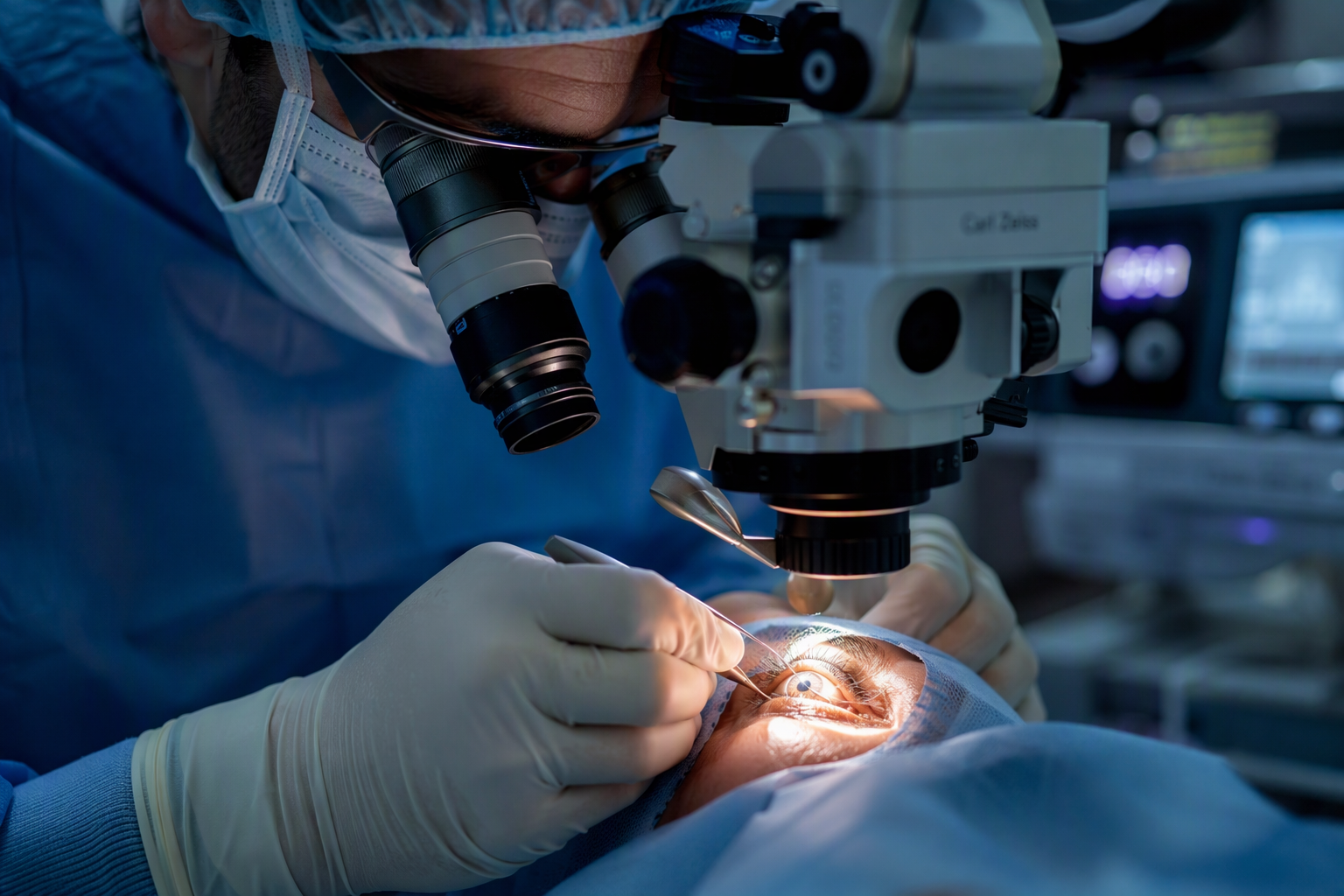
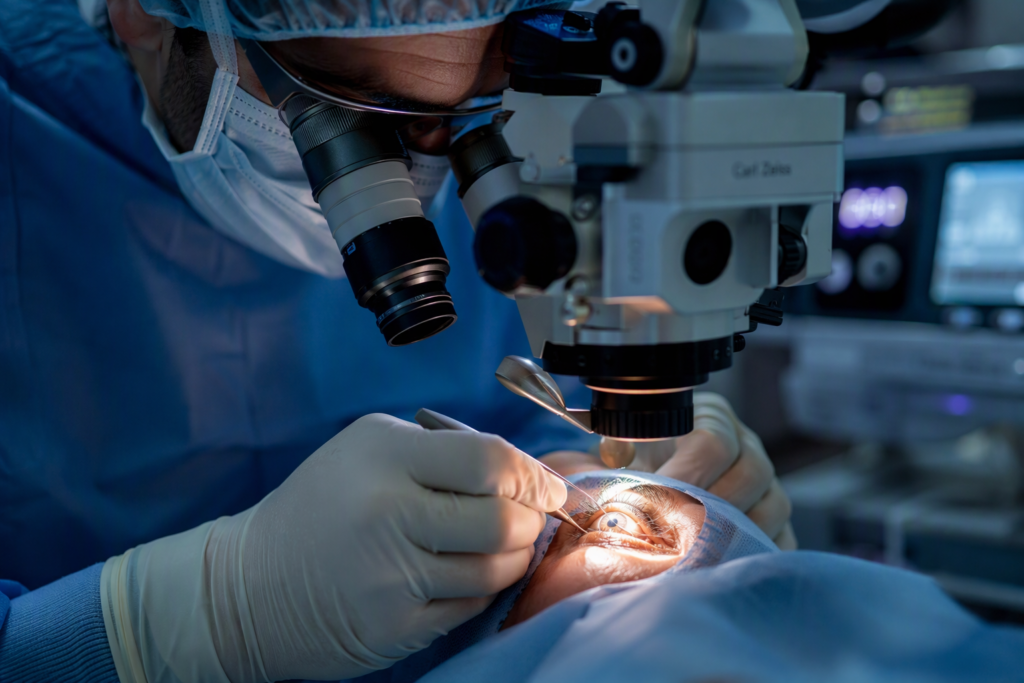
Clay Eye Physicians & Surgeons is proud to bring advanced glaucoma treatment options to patients in Clay County and throughout Northeast Florida. Glaucoma surgeon David Hayes, DO, performed the first OMNI Ultra glaucoma procedure in Clay County, marking an important milestone in access to specialized glaucoma care close to home.
OMNI Ultra is an advanced, implant-free, minimally invasive glaucoma surgery (MIGS) technology designed to help lower eye pressure in adults with primary open-angle glaucoma. By working with the eye’s natural drainage system, the procedure offers an additional surgical option for appropriately selected patients.
If you have glaucoma, Dr. Hayes and the Clay Eye team can help you understand your treatment options and determine which approach may best support your long-term eye health.
Interested in learning more about OMNI Ultra? Contact Clay Eye Physicians & Surgeons to schedule an appointment.
What Is OMNI Ultra Glaucoma Surgery?
Glaucoma is a group of eye diseases that can damage the optic nerve and lead to permanent vision loss. In many cases, this damage is associated with elevated intraocular pressure (IOP), which is the pressure inside the eye.
The eye continuously produces a clear fluid called aqueous humor. This fluid normally drains through a network of tissues and channels. When drainage does not work efficiently, pressure can increase and contribute to optic nerve damage.
OMNI Ultra is designed to improve fluid drainage through the eye’s natural outflow pathway. Unlike procedures that rely on a permanent implant, OMNI Ultra uses specialized surgical instruments to address drainage resistance without leaving an implant behind.
The goal is to help lower intraocular pressure as part of an individualized glaucoma treatment plan.
How Does the OMNI Ultra Procedure Work?
OMNI Ultra combines two techniques: canaloplasty and trabeculotomy. Together, they address resistance at multiple points along the eye’s natural drainage pathway.
Canaloplasty: Improving Natural Fluid Drainage
During canaloplasty, the surgeon uses a specialized microcatheter to access and dilate Schlemm’s canal, a circular channel involved in draining fluid from the eye.
OMNI Ultra is designed to allow canaloplasty around the circumference of this channel in a single pass, helping address resistance within the natural drainage system.
Trabeculotomy: Addressing Drainage Resistance
After canaloplasty, the surgeon performs trabeculotomy, which opens a portion of the trabecular meshwork. This tissue plays an important role in fluid drainage and can contribute to resistance as fluid leaves the eye.
By combining these techniques, OMNI Ultra is designed to address multiple areas of resistance along the eye’s conventional drainage pathway and help reduce intraocular pressure.
What Are the Potential Benefits of OMNI Ultra?
For appropriate patients with primary open-angle glaucoma, OMNI Ultra may offer several potential advantages:
- Implant-free approach: No permanent implant is left inside the eye.
- Minimally invasive technique: The procedure is performed through a small incision in the cornea.
- Targets natural drainage pathways: Canaloplasty and trabeculotomy address resistance within the eye’s conventional outflow system.
- Flexible treatment approach: It may be performed as a standalone procedure or in combination with cataract surgery when appropriate.
- Individualized glaucoma care: It provides another option for eligible patients as part of a treatment plan tailored to their needs.
Results vary from patient to patient. Your glaucoma specialist can discuss the potential benefits, risks, and limitations based on your eye health and treatment history.
Who May Be a Candidate for OMNI Ultra?
OMNI Ultra is indicated to reduce intraocular pressure in adults with primary open-angle glaucoma. Whether it is appropriate for you depends on several factors, including your glaucoma diagnosis, eye anatomy, current eye pressure, disease progression, and previous treatments.
Your doctor may discuss OMNI Ultra if you have primary open-angle glaucoma and need additional help managing eye pressure. In selected cases, the procedure may also be considered alongside cataract surgery.
Not every patient with glaucoma is a candidate for OMNI Ultra. A comprehensive evaluation by a glaucoma specialist is necessary to determine whether this procedure is appropriate for you.
What Should You Expect During and After Surgery?
OMNI Ultra is a surgical procedure performed by a trained ophthalmic surgeon. Your care team will explain the anesthesia plan, preparation instructions, and what to expect on the day of surgery.
The procedure is generally performed in an outpatient surgical setting, and patients typically return home the same day. Your surgeon will provide specific instructions for recovery, including any activity restrictions, prescribed medications, and follow-up appointments.
Follow-up care is important because your doctor needs to monitor your healing and eye pressure after surgery. Some patients may still need glaucoma eye drops after the procedure. Do not stop or change your medications unless your doctor instructs you to do so.
Your recovery and results will depend on your individual condition and response to treatment.
Why Choose Clay Eye Physicians & Surgeons for Glaucoma Care?
At Clay Eye Physicians & Surgeons, we believe patients deserve access to experienced specialists, advanced treatment options, and clear information about their eye health.
With five locations serving Orange Park, Fleming Island, Mandarin, Riverside, and Middleburg, Clay Eye provides comprehensive eye care close to home for patients throughout Northeast Florida.
Dr. David Hayes, DO, and our team work with patients to evaluate glaucoma, explain available treatment options, and develop individualized care plans. Dr. Hayes’s performance of Clay County’s first OMNI Ultra glaucoma procedure represents our ongoing commitment to bringing advanced eye care to the communities we serve.
Frequently Asked Questions About OMNI Ultra
Does OMNI Ultra cure glaucoma?
No. Glaucoma is a chronic condition, and OMNI Ultra does not cure the disease or reverse existing optic nerve damage. The procedure is designed to help lower eye pressure as part of ongoing glaucoma management.
Does OMNI Ultra leave an implant in the eye?
No. OMNI Ultra is an implant-free procedure. It works on the eye’s natural drainage pathway without leaving a permanent implant behind.
Can OMNI Ultra be performed with cataract surgery?
Yes. For appropriate adult patients with primary open-angle glaucoma, OMNI Ultra may be performed on its own or in combination with cataract surgery. Your surgeon can determine which approach is suitable for your needs.
Will I still need glaucoma eye drops after surgery?
Possibly. Some patients continue to need glaucoma medications after surgery. Your doctor will monitor your eye pressure and determine whether your medication plan needs to be adjusted.
Is OMNI Ultra right for every glaucoma patient?
No. OMNI Ultra is indicated for adults with primary open-angle glaucoma, but not every patient is a candidate. Your glaucoma specialist will evaluate your condition, eye anatomy, and treatment history before recommending a procedure.
Take the Next Step Toward Personalized Glaucoma Care
Understanding your options is an important part of managing glaucoma. If you have been diagnosed with glaucoma or have questions about advanced treatment options, Clay Eye Physicians & Surgeons is here to help.
Schedule an appointment with Clay Eye Physicians & Surgeons to learn more about glaucoma care and whether OMNI Ultra may be an option for you.
OMNI Ultra is indicated for canaloplasty followed by trabeculotomy to reduce intraocular pressure in adults with primary open-angle glaucoma. As with any surgical procedure, risks and potential complications exist. Individual results vary. A consultation with a qualified glaucoma specialist is necessary to determine whether this procedure is appropriate for you.
