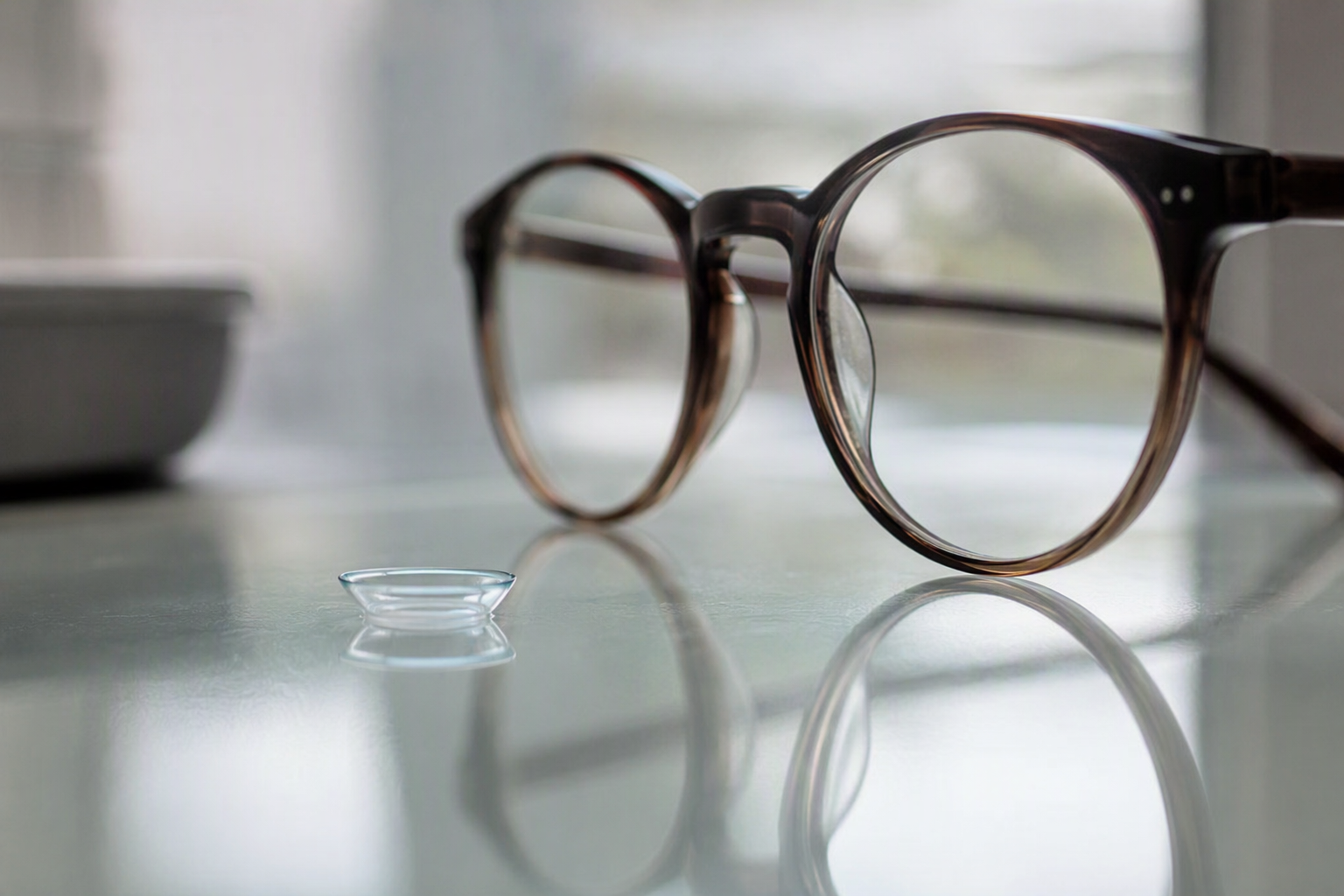
Key Highlights
- Contact lenses and glasses are both effective vision correction tools for common refractive errors.
- Your best choice depends on eye health, vision needs, comfort, budget, and daily wear habits.
- Glasses are simple to maintain and can offer eye protection from wind, dust, and debris.
- Contact lenses can provide a wider field of vision and support an active lifestyle.
- An eye doctor and a full eye exam help match the right lens type to your eyes.
- Many people use both for flexible, comfortable vision.
Introduction
Option 1
Glasses or contact lenses—which one is right for you? The answer goes far beyond appearance. The way you choose to correct your vision can impact everything from your daily comfort and favorite activities to your overall eye health. While both glasses and contact lenses can provide clear, effective vision correction, each comes with unique benefits that may make one a better fit for your lifestyle and vision needs.
Whether you need the freedom of clear vision during sports and other activities, prefer a simple and convenient option for everyday life, or need to consider concerns like dry eyes, the best choice comes down to your unique needs and lifestyle. A comprehensive eye exam can help determine which option is safest, most comfortable, and best suited for your vision and eye health.
Understanding Vision Correction Options
Vision correction works by changing the way light enters the eye and focuses on the retina. Both glasses and different types of contact lenses are designed to correct common refractive errors, including nearsightedness, farsightedness, and astigmatism, helping you see more clearly.
However, there is no one-size-fits-all answer when choosing between contacts and glasses. During a comprehensive eye exam, your eye doctor can evaluate your vision, eye health, lifestyle, and personal preferences to help determine which option may be best for you.
So, what should you consider when deciding between contact lenses and glasses? From comfort and convenience to eye health and daily activities, the sections below will help you understand the key differences and make an informed choice.
How Glasses and Contact Lenses Correct Vision
Glasses sit slightly in front of the eyes and bend light before it enters the eye, helping it focus properly for clear vision. Because of their distance from the eye, glasses and contact lens prescriptions are not always the same, which can affect peripheral vision.
Contact lenses rest directly on the tear film covering the cornea and move naturally with each blink. Their close fit can provide a wider, more natural field of vision with less peripheral distortion.
Both options effectively correct refractive errors, and the best choice depends on your prescription, comfort, lifestyle, and vision needs.
Assessing Your Personal Vision Needs
Your lifestyle can be just as important as your prescription when choosing between glasses and contact lenses. Consider your daily routine, activities, comfort, and overall eye health.
Your eye doctor may evaluate factors such as screen time, sports, dry eyes, allergies, prescription changes, and how long you plan to wear your vision correction each day.
Glasses offer convenience and minimal maintenance, while contact lenses require more care but may provide a wider field of vision. The best choice depends on your individual needs, lifestyle, and personal preferences.
Advantages of Wearing Glasses

For many people, glasses are a simple and reliable solution for long-term vision correction. They are easy to use, require minimal daily maintenance, and can accommodate a wide range of prescriptions and lens options.
Glasses can also offer benefits for overall eye health. Because they do not rest directly on the surface of the eye, they avoid some of the risks associated with contact lens wear, particularly when lenses are not properly cleaned or cared for. Additionally, glasses can also help minimize digital eye strain by providing a barrier against environmental irritants such as dust and wind.
If you are looking for a convenient, low-maintenance option for everyday vision correction, glasses may be an excellent choice. Here are some of the key benefits that continue to help you make an informed decision about eyeglasses as a trusted option for clear, comfortable vision.
Key Benefits for Eye Health and Comfort
When it comes to everyday eye comfort, a pair of glasses may be a better option for some people. Because you do not need to place them directly on the surface of your eyes, glasses can reduce the risk of irritation associated with contact lens wear and may be especially comfortable for people with dry or sensitive eyes.
Some additional benefits of glasses include:
- A lower risk of irritation for people with dry or sensitive eyes
- An added layer of protection from wind, dust, and other airborne particles
- Lens options designed to improve comfort during extended computer use
- Anti-reflective coatings that can help reduce glare and reflections
This does not mean contact lenses are unsafe. With proper hygiene, handling, and care, contact lenses can be a safe and effective option for vision correction. However, if you are looking for a simple, low-maintenance option that gives your eyes a break, glasses may be the better choice—especially on days when your eyes feel tired, irritated, or dry.
Variety in Styles and Lens Features
Glasses offer a wide range of frame styles and lens options to fit both your vision needs, including those with a strong prescription, and personal style. From subtle, classic frames to bold designer looks, you can choose glasses that feel comfortable and reflect your personality.
Today’s lenses can also be customized for the way you live. Single-vision lenses correct vision at one distance, while progressive lenses provide seamless correction for near, intermediate, and distance vision. Other options, including photochromic lenses that darken outdoors and anti-reflective coatings that help reduce glare, can improve comfort and visual clarity. Single vision lenses are ideal for specific tasks.
Whether you spend your day working on a computer, driving, enjoying outdoor activities, or moving between different tasks, the right combination of frames and lenses can provide clear, comfortable vision tailored to your lifestyle.
Benefits of Contact Lenses
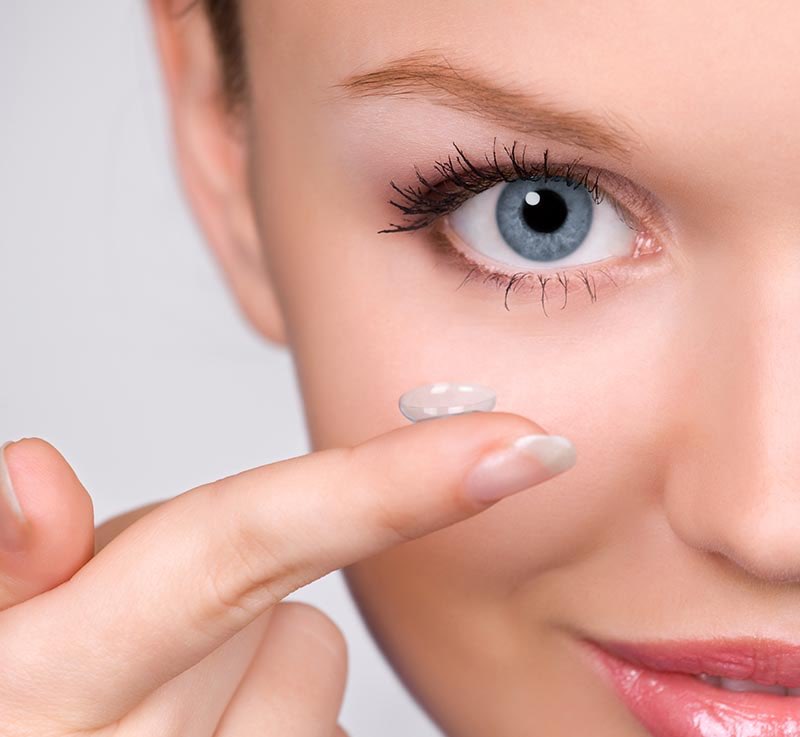
Contact lenses can provide a wider field of vision and greater freedom for contact lens wearers who prefer not to wear glasses. They are especially convenient for active lifestyles and come in a variety of options to meet different vision needs. However, proper daily care is essential for safe, comfortable wear.
Enhanced Field of View and Lifestyle Flexibility
If you live an active lifestyle, contact lenses can offer a level of freedom that glasses may not. Because they sit directly on the eye and move with your natural eye movements, they provide clear vision without frames getting in the way or limiting your peripheral view.
For sports, exercise, and other activities, contact lenses can offer several advantages:
- They stay in place while you run, exercise, or play sports
- They will not fog up during changes in temperature or humidity
- They can be worn comfortably with helmets, goggles, and other protective gear
- They provide a wide, natural field of vision without frames blocking your view
However, proper contact lens care is essential. Water exposure can increase the risk of eye infections, so contact lenses should not be worn while swimming or showering. For people who are always on the move, though, contacts can provide convenient, flexible vision correction that keeps up with an active lifestyle.
Eye Health and Safety Considerations
Eye health is an important factor when choosing between glasses and contact lenses. While both can be safe and effective, glasses require less daily care, while contacts need proper cleaning and handling to reduce the risk of infection. Your eye doctor can help determine the best option based on your eye health, lifestyle, and vision needs.
Risks and Precautions with Contact Lens Use
Contact lenses can be safe for most people, but you need to use them the right way. The main things that cause trouble are bad cleaning habits, sleeping in contact lenses that are not made for sleeping, or letting them touch water. All of these can make you get serious eye infections, and some of those infections can be serious.
To keep your eye health in good shape, do these basic steps for contact lens care:
- Wash and dry your hands before you touch any contact lens
- Use new solution every time and do not add new solution to old liquid in the lens case
- Change the lens case often
- Take out the lenses right away if you feel pain, redness, or your vision changes
Wearing contacts takes more discipline than glasses. If you still have symptoms after you take out your lenses, call your eye doctor right away. Fast care matters because even small problems can get worse quickly. Safe wearing depends on proper care, regular eye exams, and sticking to your replacement schedule.
Factors to Consider for Sensitive or Dry Eyes
Sensitive eyes do not always mean you can’t wear contact lenses. They just need to be checked more carefully by an eye doctor. Some eye conditions, like dry eyes and dry eye syndrome, can make contact lenses less comfortable. This is because the lenses sit on the tear film and may make dryness worse during the day.
This does not mean that glasses have to be the only answer. Some people with dry eyes can still wear contact lenses with the right type and a special plan. Scleral, hydrogel, water-gradient, or other specialty designs may be picked by an eye doctor to find the best fit and comfort. Using eye drops made for contacts may help as well.
For some people, glasses are the better option. They don’t disturb the tear film and can be easier to use during allergy season, while at a computer, or during long days at work. Seeing an eye doctor for a careful exam will help you know what is best for your eyes.
Cost Comparison: Contact Lenses vs. Glasses
Cost is another factor to consider when choosing between glasses and contact lenses. Glasses may have a higher upfront cost, while contacts often involve ongoing expenses for replacements and care supplies. Your total cost will depend on your prescription, how often you wear them, and your vision insurance plans coverage.
Caring for Your Lenses and Frames
Both glasses and contact lenses require regular care, but the level of maintenance is very different. Contact lenses require a consistent daily routine, including proper cleaning, storage, replacement, and lens case care. Glasses are generally easier to maintain, requiring simple cleaning, safe storage, and occasional adjustments or repairs.
The following sections cover the best practices for caring for both glasses and contact lenses.
Maintenance Requirements for Contact Lenses
Contact lenses can be a safe and effective option for most people when worn and cared for properly. Many contact lens-related problems are linked to poor hygiene, sleeping in lenses that are not approved for overnight wear, or exposing lenses to water. These habits can increase the risk of eye infections, some of which can result in serious vision loss.
To help protect your eye health, follow these basic contact lens care guidelines:
- Wash and thoroughly dry your hands before handling your contact lenses
- Use fresh contact lens solution each time, and never “top off” old solution in the lens case
- Replace your contact lens case regularly
- Remove your lenses immediately if you experience pain, redness, irritation, or changes in vision
- Follow your recommended replacement schedule and never wear lenses longer than instructed
Contact lens wear requires more daily care and attention than glasses. If symptoms continue after removing your lenses, contact your eye doctor promptly. Early treatment is important because some eye problems can worsen quickly. Safe contact lens wear depends on proper hygiene, regular comprehensive eye exams, and consistently following your eye doctor’s recommendations.
Best Practices for Cleaning and Storing Glasses
Glasses are simple to look after, but you still need to have good habits. The best thing to do is clean them with care. Use a microfiber cloth, and a lens-safe cleaner, or just mild soap and water. Do not use paper towels, clothing, or strong chemicals. These can scratch eyeglass lenses or hurt special coatings.
How you store your glasses is important too. Put them in a hard case when you are not wearing them. That keeps the frame shape right. It also keeps the lens surfaces and hinges safe. At Clay Eye, we encourage proper care to help protect your glasses, especially if you have invested in designer frames or premium lens features.
You should also check if your glasses fit well every now and then. Loose screws, worn nose pads, or arms that look off can make them less comfortable and may hurt how you see. If your glasses sit the wrong way on your face, get them fixed by a pro. With simple cleaning and good storage, your glasses stay in nice shape with less trouble than contact lenses.
Conclusion
When choosing between contact lenses and glasses, the best option comes down to your lifestyle, vision needs, comfort, and personal preferences. Both offer effective vision correction, each with its own advantages when it comes to convenience, style, eye health, maintenance, and cost.
You may even find that using both works best for different activities and situations. Whatever you choose, proper eye care, regular comprehensive eye exams, and an up-to-date prescription are essential for protecting your vision and preventing eye diseases and maintaining eye health.
If you are unsure which option is right for you, an eye care professional can help you find the best fit for your eyes and lifestyle.
Frequently Asked Questions
Is it bad to wear contact lenses every day?
Daily contact lens wear can be a safe and convenient option when you follow your eye doctor’s instructions and recommended replacement schedule. Good hygiene and proper lens care are essential, and you should never sleep in your lenses unless they are specifically approved for overnight wear.
If your eyes become red, painful, irritated, or your vision suddenly becomes blurry, remove your contact lenses and contact your eye doctor as soon as possible.
How do I know if my glasses prescription needs updating?
Signs that you may need new glasses can include blurry vision, tired or strained eyes, frequent headaches, or difficulty focusing on objects near or far. Because prescription changes often happen gradually, you may not notice them right away. Regular eye exams can help detect changes in your vision and determine whether it is time to update your glasses. If it’s been a while since your last eye exam, call Clay Eye Today to schedule your comprehensive eye exam (904) 272-2020.
Can dry eye syndrome prevent me from wearing contacts?
Dry eye syndrome can make contact lens wear more challenging, but it does not necessarily mean you cannot wear contacts. Your eye doctor can evaluate your tear film and overall eye health to determine which lens type may provide the best comfort. Contact lens-compatible lubricating eye drops may also help manage dryness. For some people, however, glasses may be the more comfortable option, especially during periods of increased dry eye symptoms.